
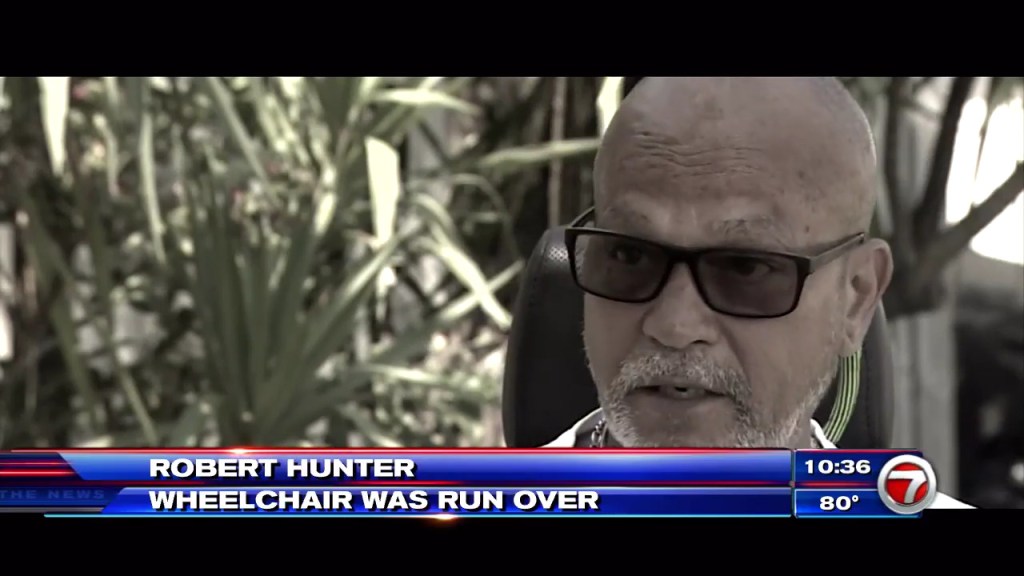
This story is about a group of unlikely heroes coming to the rescue of Robert Hunter, a disabled Iraqi War veteran, in need after his wheelchair was destroyed by a negligent construction company.
Story Sequence (Beginning, Middle, and End)
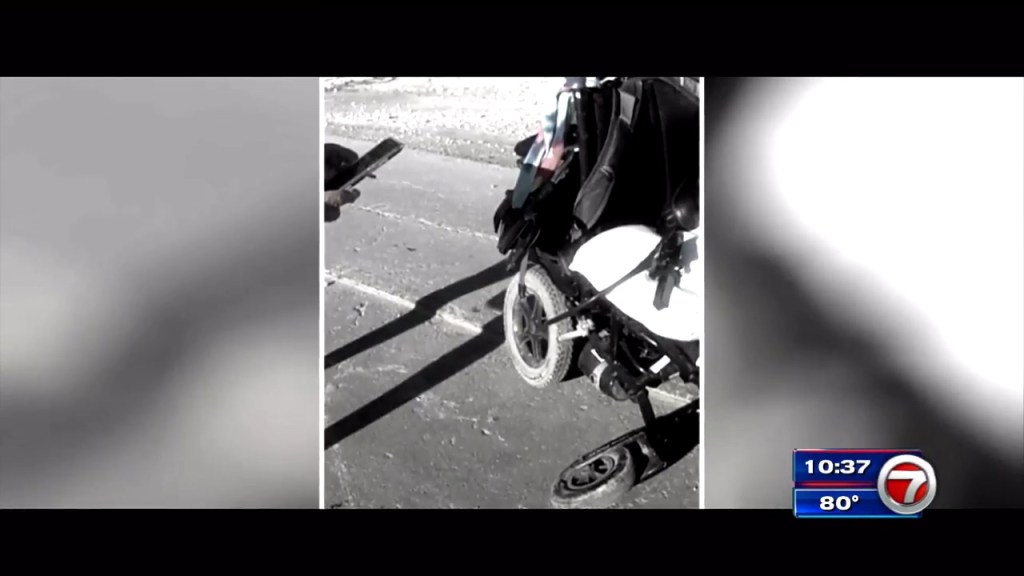
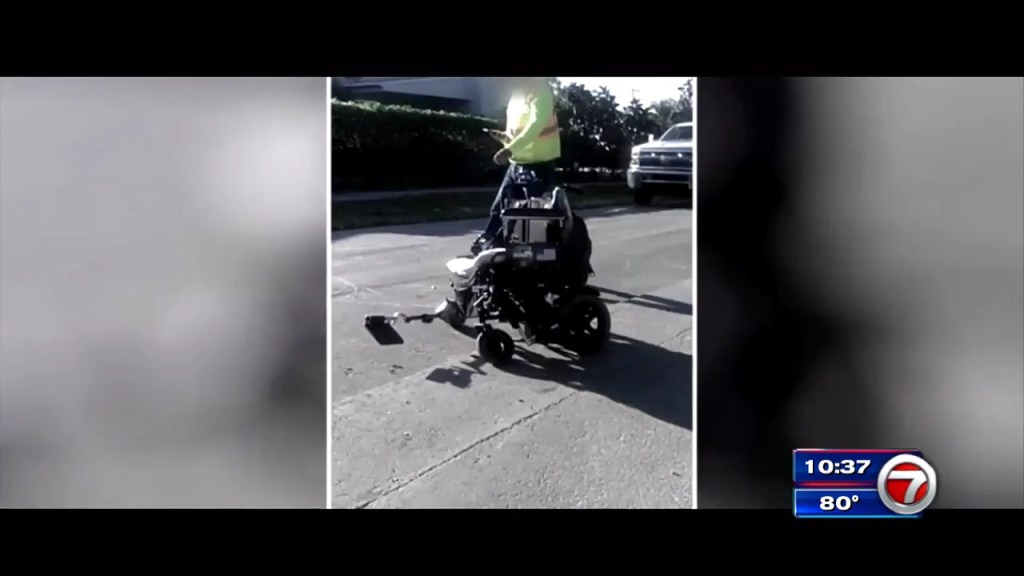
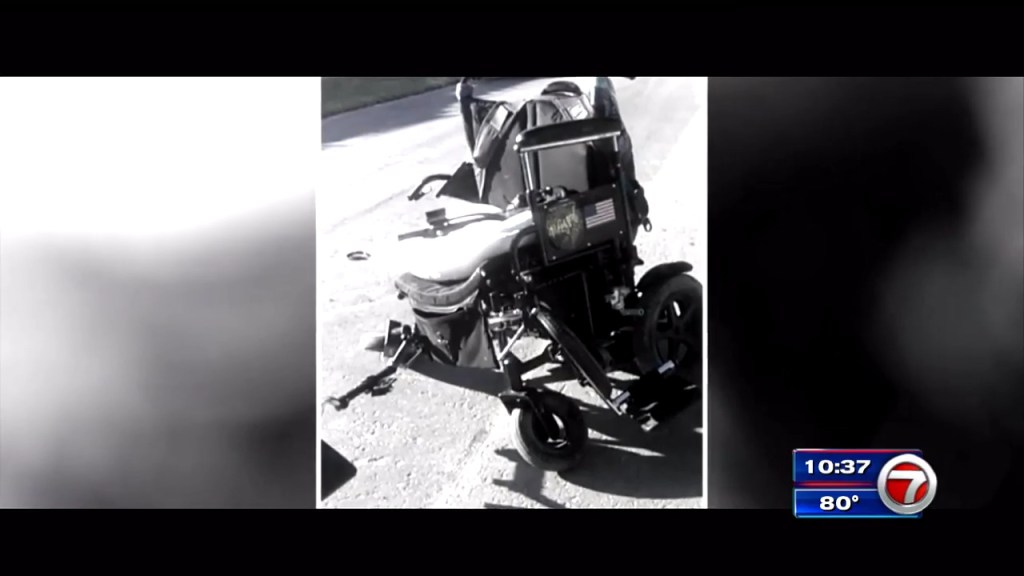
The neighborhood that Robert lived in was undergoing construction when the construction company tore up the sidewalk near his house. To get to the sidewalk on the other side, Robert had to cross the street, and as he was doing so, the driver of a front-end loader didn’t see him and hit reverse, almost crushing him. To prevent that from happening, Robert jumped out of his chair, leaving it to be crushed by the front-end loader.
To get the money for a new wheelchair, Robert reached out to the construction company who said they wouldn’t pay for it. His story aired on WSVN, and not long after, phone calls and letters started pouring in of viewers wanting to help in replacing his $3,500 wheelchair.
Johanna Pardo, from Total Mobility Services also saw his story and wanted to help, so she allowed Robert to come in and pick out a new wheelchair. He also accepted another wheelchair from a viewer who donated it to him after her husband died.
Characters
There were three main or types of characters present within this story: the protagonist, antagonist, and the heroes. The story’s protagonist is Robert who needed help to get a new wheelchair or to repair his old one after it was run over by a construction company. The antagonist is the construction company that ran over Robert’s wheelchair and wouldn’t pay for him to get a new one. The unlikely heroes are the residents of South Florida that watched Robert’s story on WSVN and reached out to help him to get two new wheelchairs.
The story was driven by Robert, the protagonist, to get a new wheelchair, as well as the viewers that saw his story and wanted to help him.
Emotion
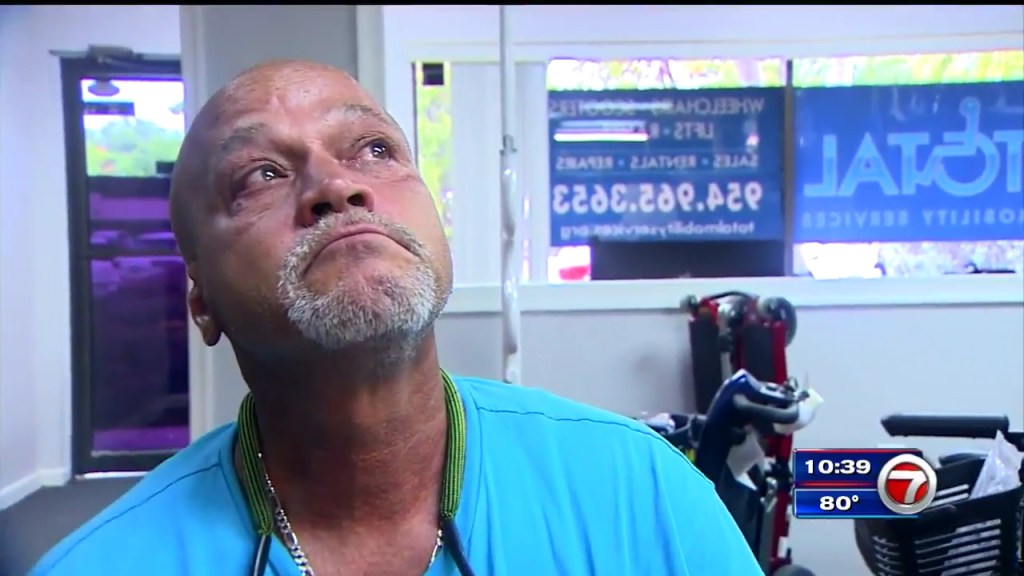
I think that elements of this story appeared to tug on the heartstrings of viewers because it enacted some form of emotion. While watching his story, I felt anger towards the construction company for not helping after they damaged Robert’s wheelchair. I also was sympathetic to Robert, who is a disabled veteran that relied on his wheelchair to get around. Seeing him tear up made me feel sad for him, and when he cried at the end, I was happy because you could see that he was crying tears of joy after receiving two wheelchairs in an unexpected way. People also love to help give back to war vets and seeing one such as Robert struggle probably pushed people to want to help him.
Universal Experiences
Everyone at some point in life has experienced loss, love, struggle, pain, fear and other emotions that we can all relate to. The reporter, Patrick Fraser, used universal emotional experiences to help tell and move the story around. He began by showing Robert crying and asking for a napkin to wipe his face, which foreshadowed the ending of the video where Robert expressed his happiness for having people help by giving him a new wheelchair. Robert described the fear that he felt as he was crossing the street and trying to swiftly get from behind the front-end loader. I think if people were in the same situation or in one where they were going to be hit by any type of vehicle, they would feel just as fearful as Robert did.
Media Elements
In a visual story such as a video, to help push forward the narrative of the story, its important to give viewers different elements that can help tie the story together. The first element that I noticed in the story were photos. The reporter, Patrick Fraser, incorporated photos of Robert’s wheelchair after it was run over to show the viewers just how badly damaged it was. Sound is the second element that’s also very important in a video. Not necessarily being able to hear the story being narrated, but also natural sound bites that can make a viewer hear what the victim or protagonist heard at that time. In this case, natural sounds of Robert’s wheelchair were used when he was moving, especially in close-up shots as he tested out different wheelchairs. Another sound that was used was of a front-end loader as it was reversing. Aside from the normal footage of the story, Fraser also incorporated b-roll of him answering the phone and close-ups as he scrolled on the computer reading emails from viewers wanting to help. The emails were also shown in a few close shots, which gave the audience the opportunity to actually read what viewers said that wanted to help Robert. These were a great addition because it helped the story push forward with clips that gave insight into what happened backstage.
To watch the full video, go to the WSVN site or click on this link: https://wsvn.com/news/help-me-howard/after-his-wheelchair-was-destroyed/

